
The physical weight of the Cross alone, by itself, didn’t make the Son of God stagger and collapse along the way. No! The weight of the world was upon the shoulders of the Lamb of God (Isa. 9:6-7).
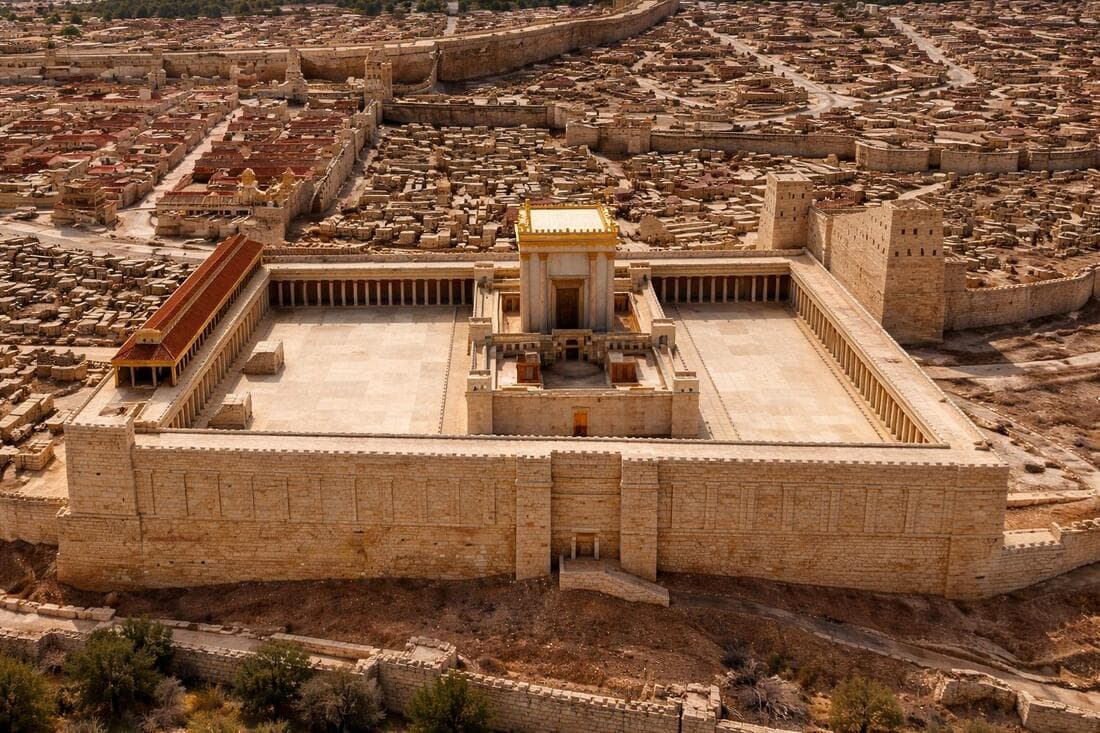
“Then delivered he Him therefore unto them to be crucified. And they took Jesus, and led Him away. And He bearing His cross went forth into a place called the place of a skull, which is called in the Hebrew Golgotha:” — John 19:16-17
“And after that they had mocked him, they took the robe off from him, and put his own raiment on him, and led him away to crucify him. And as they came out, they found a man of Cyrene, Simon by name: him they compelled to bear his cross.” — Matt. 27:31-32
“And when they had mocked him, they took off the purple from him, and put his own clothes on him, and led him out to crucify him. And they compel one Simon a Cyrenian, who passed by, coming out of the country, the father of Alexander and Rufus, to bear his cross.” — Mk. 15:20-21
“It can be easily concluded that prior to and leading up to the time of the crucifixion, Jesus Christ had undergone significant blood loss through the scourging process, buffeting, and smiting of the people (Matt. 26:67, 27:30, Mk. 15:19, Lk. 22:63-64, Jn. 19:3, Matt. 27:26, Mk. 15:15, Jn. 19:1). His body was likely debilitated by dehydration, extreme exhaustion, stress reactions through the release of stress hormones, low blood pressure, and low blood perfusion due to profuse blood loss. He was likely experiencing deeply excruciating, stabbing, explosive, and electric-like pain due to the opening up of the chest cavity, and wounds inflicted throughout his body and head by the scourging process and smiting on the head and body by His accusers. This is evidenced by the fact that Jesus Christ was unable to carry the cross, weighing up to 60 kg (132 lbs), though he sought to, and thus, Simon of Cyrene was found and made to bear it with him (Bordes (2020), Matt. 27:32, Mk. 15:21, Lk. 23:26, Jn. 19:17).”- Dr. Preethi Morris
“Is it nothing to you, all ye that pass by? behold, and see if there be any sorrow like unto my sorrow, which is done unto me, wherewith the LORD hath afflicted me in the day of his fierce anger.” — Lam. 1:12
O Christ, what burdens bow’d Thy head! Our load was laid on Thee; Thou stoodest in the sinner’s stead, Didst bear all ill for me. A victim led; Thy blood was shed; Now there’s no load for me.
“…Who among us shall dwell with the devouring fire? Who among us shall dwell with everlasting burnings? ” — Isa. 33:14
“For the bodies of those beasts, whose blood is brought into the sanctuary by the High Priest for sin, are burned without the camp. Wherefore Jesus also, that He might sanctify the people with His own blood, suffered without the gate.”- Heb. 13:11-12 (Ex. 29:14, Lev. 4:11-12, 21, 6:30, 8:17, 16:27)
“And he shall bring the bullock unto the door of the tabernacle of the congregation before the LORD ; and shall lay his hand upon the bullock's head, and kill the bullock before the LORD. And the priest that is anointed shall take of the bullock's blood, and bring it to the tabernacle of the congregation: And the priest shall dip his finger in the blood, and sprinkle of the blood seven times before the LORD, before the vail of the sanctuary. And the priest shall put some of the blood upon the horns of the altar of sweet incense before the LORD, which is in the tabernacle of the congregation; and shall pour all the blood of the bullock at the bottom of the altar of the burnt offering, which is at the door of the tabernacle of the congregation. And he shall take off from it all the fat of the bullock for the sin offering; the fat that covereth the inwards, and all the fat that is upon the inwards, And the two kidneys, and the fat that is upon them, which is by the flanks, and the caul above the liver, with the kidneys, it shall he take away, As it was taken off from the bullock of the sacrifice of peace offerings: and the priest shall burn them upon the altar of the burnt offering. And the skin of the bullock, and all his flesh, with his head, and with his legs, and his inwards, and his dung, Even the whole bullock shall he carry forth without the camp unto a clean place, where the ashes are poured out, and burn him on the wood with fire: where the ashes are poured out shall he be burnt.” — Lev. 4:4-12
“The priest then took the bullock, and gathering up all the innards, every part of it, the skin, the dung — all mentioned to teach us what a horrible thing sin is, and what the Surety was looked upon as being when He took our sin — he took it all up, and either himself personally, or assisted by others, took it away out of the camp. We are told that in the wilderness, so large was the camp, that it may have been the distance of four miles that this bullock had to be carried. I think I see the sad procession — the priest all smeared with blood, carrying the carcass of the bullock, taking it right away down the long line of tents, first through the abodes of one tribe and then of another, through the long streets of tents, while the people stood at their doors and saw the ghastly sight. It was killed at the altar of burnt offering. Why was it not burnt there? That altar was holy, and as soon as ever sin was laid upon the bullock, it ceased to be any longer looked upon as a holy thing. It could not therefore be burnt in the holy place, it must be right taken away. So the priest carried it away — a terrible load — till he reached the usual place where the ashes were kindled, and he put the bullock there, and heaped the hot ashes upon it till the whole smoked up to heaven, and was utterly consumed as a sin offering.”- C.H. Spurgeon, The Sin Offering
“If you have read the order of the burnt offering, you will have noticed that when the bullock of the burnt offering was offered, it was washed, to show the perfection of Christ as He is a sweet savor, all pure and clean, but in this case there is added that humiliating word, “with the dung.” What a humiliating type of Christ! Ah, but what are your sins and mine that were laid upon Jesus? How could our iniquities and transgressions be better set forth than by that bleeding, mangled mass, which the high priest had to carry out away from the camp, as though it were a thing abhorred, which could not be endured in the camp any longer? It is your Savior made sin for you and put away on your behalf.”– C.H. Spurgeon, The Sin Offering
“And as they led him away, they laid hold upon one Simon, a Cyrenian, coming out of the country, and on him they laid the cross, that he might bear it after Jesus. And there followed him a great company of people, and of women, which also bewailed and lamented him. But Jesus turning unto them said, Daughters of Jerusalem, weep not for me, but weep for yourselves, and for your children. For, behold, the days are coming, in the which they shall say, Blessed are the barren, and the wombs that never bare, and the paps which never gave suck. Then shall they begin to say to the mountains, Fall on us; and to the hills, Cover us. For if they do these things in a green tree, what shall be done in the dry? And there were also two other, malefactors, led with him to be put to death.” — Luke 23:26-32
“And after threescore and two weeks shall Messiah be cut off, but not for Himself : and the people of the Prince that shall come shall destroy the city and the sanctuary; and the end thereof shall be with a flood, and unto the end of the war desolations are determined.” — Dan. 9:26
“Hear another parable: There was a certain householder, which planted a vineyard, and hedged it round about, and digged a winepress in it, and built a tower, and let it out to husbandmen, and went into a far country: And when the time of the fruit drew near, he sent his servants to the husbandmen, that they might receive the fruits of it. And the husbandmen took his servants, and beat one, and killed another, and stoned another. Again, he sent other servants more than the first: and they did unto them likewise. But last of all he sent unto them his son, saying, They will reverence my son. But when the husbandmen saw the son, they said among themselves, This is the heir; come, let us kill him, and let us seize on his inheritance. And they caught him, and cast him out of the vineyard, and slew him. When the lord therefore of the vineyard cometh, what will he do unto those husbandmen? They say unto him, He will miserably destroy those wicked men, and will let out his vineyard unto other husbandmen, which shall render him the fruits in their seasons. Jesus saith unto them, Did ye never read in the scriptures, The stone which the builders rejected, the same is become the head of the corner: this is the Lord's doing, and it is marvellous in our eyes? Therefore say I unto you, The kingdom of God shall be taken from you, and given to a nation bringing forth the fruits thereof. And whosoever shall fall on this stone shall be broken: but on whomsoever it shall fall, it will grind him to powder.” — Matt. 21:33-44
The Doctrine of the Tree punctuates the Law in the Book of Joshua. This punctuation brings the needed closure to the story of divine wrath being depicted in the Law.
Read →God tested Abraham with the trial of his life. The word of the LORD came to Abraham, and the renowned Patriarch was immediately filled with unspeakable anguish. God commanded him to give up his son,
Read →In the presence of God the Consuming Fire, all eyes were fixed on Moses as a Mediator (Gal. 3:19). Similarly, Abraham said under inspiration, “God will provide Himself a Lamb for a burnt-offering” (Gen. 22:8).
Read →In a marvelous prophecy, Abraham was called by God to assume the role of the Father in the Passion of Jesus Christ (Gen. 22:1-14). This viewpoint is rarely brought before readers even in the New Testament (Jn. 3:16, Rom. 8:32).
Read →Instead of using the word “Cross”, the apostles referred to it as a “Tree” on three occasions while preaching to Jews and Gentiles in Acts 5:30, 10:39, & 13:29. Why?
Read →Many sinners stopped celebrating and began crying. The noisy sound of reveling was replaced with strong regret and remorse. Many unbelievers began to make confessions of faith in dread amazement at what just happened!
Read →