
Still more think that these other episodes of suffering are not worthy to be mentioned while preaching the Atonement because it may undermine or distract people from the Cross. Nevertheless, Spurgeon very boldly declared that “the Passion began in Gethsemane”
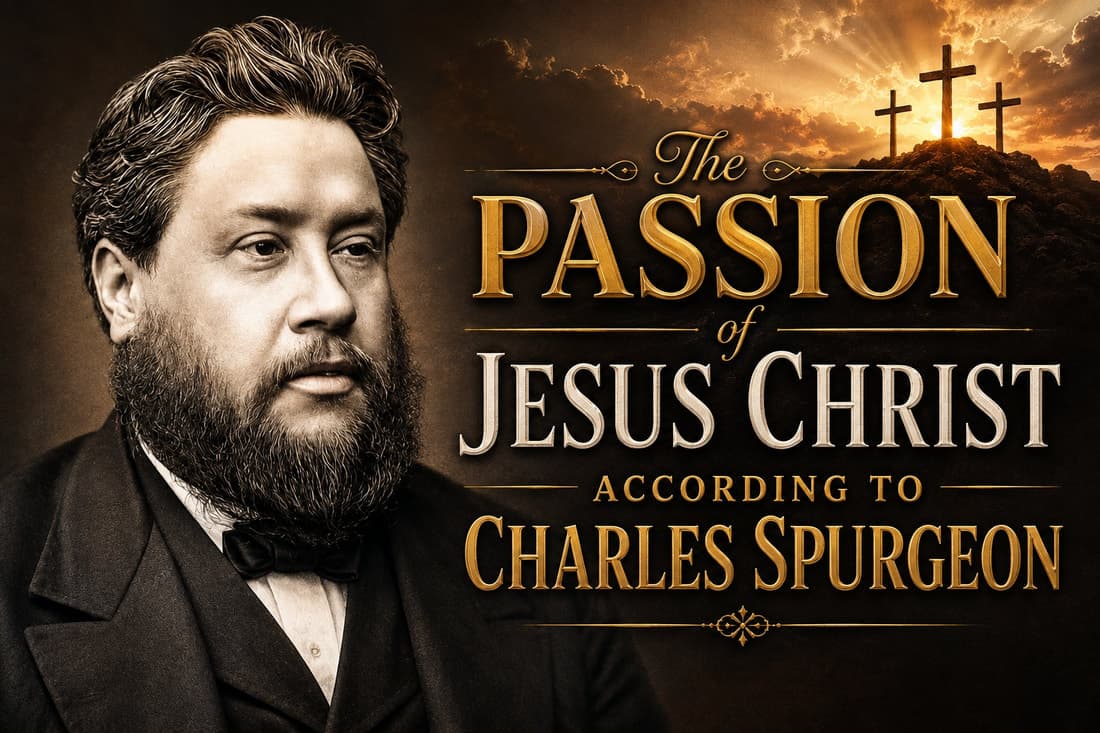
“Readers of old theology will have remarked how constantly the fathers were accustomed to dwell upon the wounds of Jesus slain.”- C.H. Spurgeon, The Water and the Blood
“I would it were more the practice of believers nowadays…to learn the divine lessons which are discoverable in the wounds of Jesus as well as the sacred admonitions bequeathed to us by the words of His mouth.”– C.H. Spurgeon, The Water and the Blood
“‘Behold, what manner of love the Father has bestowed upon us!’ Behold it in the sweat of blood which stained Gethsemane! Behold it in the scourging which has made the name of Gabbatha a terror! Behold it in ‘the pains, and groans, and dying strife’ of Calvary! Bow, did I say? Prostrate your spirits!”- C.H. Spurgeon, Christ Made Sin
“Show and parade cease to attract the soul when once the superlative excellencies of the dying Savior have been discerned by the enlightened eyes! Who seeks for ease when he has seen the Lord Christ?”- C.H. Spurgeon, The Crown of Thorns
“Yet He is no sooner in Gethsemane than He says to the three especially favored disciples, ‘My soul is exceedingly sorrowful, even unto death: tarry you here and watch with Me.’ I do not think that this great conflict arose through our dear Master’s fear of death, nor through His fear of the physical pain and all the ignominy and shame that He was so soon to endure. But, surely, the agony in Gethsemane was part of the great burden that was already resting upon Him as His people’s Substitute–it was this that pressed His spirit down even into the dust of death. He was to bear the full weight of it upon the Cross, but I am persuaded that the Passion began in Gethsemane. You know that Peter writes, “Who His own Self bore our sins in His own body on the Tree.” But we are not to gather from that passage that His substitutionary sufferings were limited to the Tree, for the original might bear this rendering–that He bore our sins in His own body up to the Tree–that He came up to the tree bearing that awful load and still continued to bear it on the Tree! You remember that Peter also writes, in the same verse, “by whose stripes you were healed.” These stripes did not fall upon Jesus when He was upon the Cross–it was in Pilate’s Judgment Hall that He was so cruelly scourged ! I believe that He was bearing our sins all His life, but that the terrible weight of with infinite intensity when He was nailed to the Cross–and so forced from Him the agonizing cry, “My God, My God, why have You forsaken Me?”- C.H. Spurgeon, Christ in Gethsemane
“To whom also He shewed Himself alive after His Passion by many infallible proofs, being seen of them forty days, and speaking of the things pertaining to the Kingdom of God:” — Acts 1:3
“Yet would I exhort you to consider these griefs, that you may love the Sufferer.”- C.H. Spurgeon, The Agony in Gethsemane
“the commencement of His Passion sufferings”- C.H. Spurgeon, Jesus in Gethsemane
“the difficulty of this imputation”– C.H. Spurgeon, Christ Made Sin
“Learn next…the matchless love of Jesus, that for your sakes and mine He would not merely suffer in body, but consented even to bear *the horror of being accounted a sinner!”- C.H. Spurgeon, The Agony in Gethsemane
“Oh Soul, sin must be an awful thing if it so crushed our Lord! If the very imputation of it fetched bloody sweat from the pure and holy Savior, what must sin, itself, be? Avoid it, pass not by it, turn away from the very appearance of it, walk humbly and carefully with your God that sin may not harm you, for it is an exceeding plague, an infinite pest!”- C.H. Spurgeon, *The Agony in Gethsemane
“Yet there was our Master, all stained with His own blood, for His heart’s floods had burst their banks and run all over Him in a gory torrent!”- C.H. Spurgeon, Christ in Gethsemane
“Trouble of spirit is worse than pain of body…”- C.H. Spurgeon, The Agony in Gethsemane
“But still the sufferings of His soul must have been the very soul of His sufferings, and can you tell what they were?”- C.H. Spurgeon, The Sin Offering
“Observe the text says, ‘The travail of His soul.’ We are not to depreciate the bodily sufferings of Christ, but still it has been well said that ‘the soul-sufferings of Christ were the soul of His sufferings.’ Brothers and Sisters, there was so much in the outward agony of Christ, that my ears have tingled and my heart burned with wrath when I have heard certain theologians speak lightly of it! Speak lightly of the sweat of blood in the Garden of Gethsemane? Speak lightly of shame, spitting and the crown of thorns? Oh, Sirs, dare you think and speak lightly of the piercing of His hands and of His feet, and of the fever which those wounds engendered, and that thirst which the fever and the broiling sun together brought on, and the rending of those hands when the feet could no longer support the body and the iron tore through the nerves? Is nothing or little to be said of all this? God forbid, Brothers and Sisters! We believe that the body of Christ took its full share of the chastisement. By His stripes we are healed! By His scourging and bodily chastisements we get at least a portion of the healing balm which cures the disease of sin! Our sin was with the body and Christ’s Atonement was with the body. Our flesh was sinful and, therefore, His flesh must suffer. Had we been simply spirits and as spirits, alone, had sinned, a spirit might have made Atonement for us–and a soul bereft of a body might have been a perfect substitute–but we are Sons of Adam and still wear this red earth about us! And as we sin in the body, so must the Savior, with hands, feet, brow and every member of His blessed frame, be made to suffer to make Atonement for our guilt! Still, still, the travail of His soul was the chief matter and it is that the text speaks about! Where shall I find a golden reed with which to measure this city, or where shall I find a plumb line with which to fathom the depths of agony which I now see before me? Jesus Christ suffered so that I despair of conceiving His sufferings, or of conveying them to you by any form of words.”- C.H. Spurgeon, The Suffering Christ Satisfied
“I do not know whether what Adam Clarke supposes is correct, that in the Garden Christ did pay more of the price than he did even on the Cross; but I am quite convinced that they are very foolish who get to such refinement that they think the Atonement was made on the Cross, and nowhere else at all. We believe that it was made in the Garden as well as on the Cross - and it strikes me that in the garden one part of Christ's work was finished, wholly finished, and that was his conflict with Satan.”- C.H. Spurgeon, Gethsemane
The Doctrine of the Tree punctuates the Law in the Book of Joshua. This punctuation brings the needed closure to the story of divine wrath being depicted in the Law.
Read →God tested Abraham with the trial of his life. The word of the LORD came to Abraham, and the renowned Patriarch was immediately filled with unspeakable anguish. God commanded him to give up his son,
Read →In the presence of God the Consuming Fire, all eyes were fixed on Moses as a Mediator (Gal. 3:19). Similarly, Abraham said under inspiration, “God will provide Himself a Lamb for a burnt-offering” (Gen. 22:8).
Read →In a marvelous prophecy, Abraham was called by God to assume the role of the Father in the Passion of Jesus Christ (Gen. 22:1-14). This viewpoint is rarely brought before readers even in the New Testament (Jn. 3:16, Rom. 8:32).
Read →Instead of using the word “Cross”, the apostles referred to it as a “Tree” on three occasions while preaching to Jews and Gentiles in Acts 5:30, 10:39, & 13:29. Why?
Read →Many sinners stopped celebrating and began crying. The noisy sound of reveling was replaced with strong regret and remorse. Many unbelievers began to make confessions of faith in dread amazement at what just happened!
Read →